
News
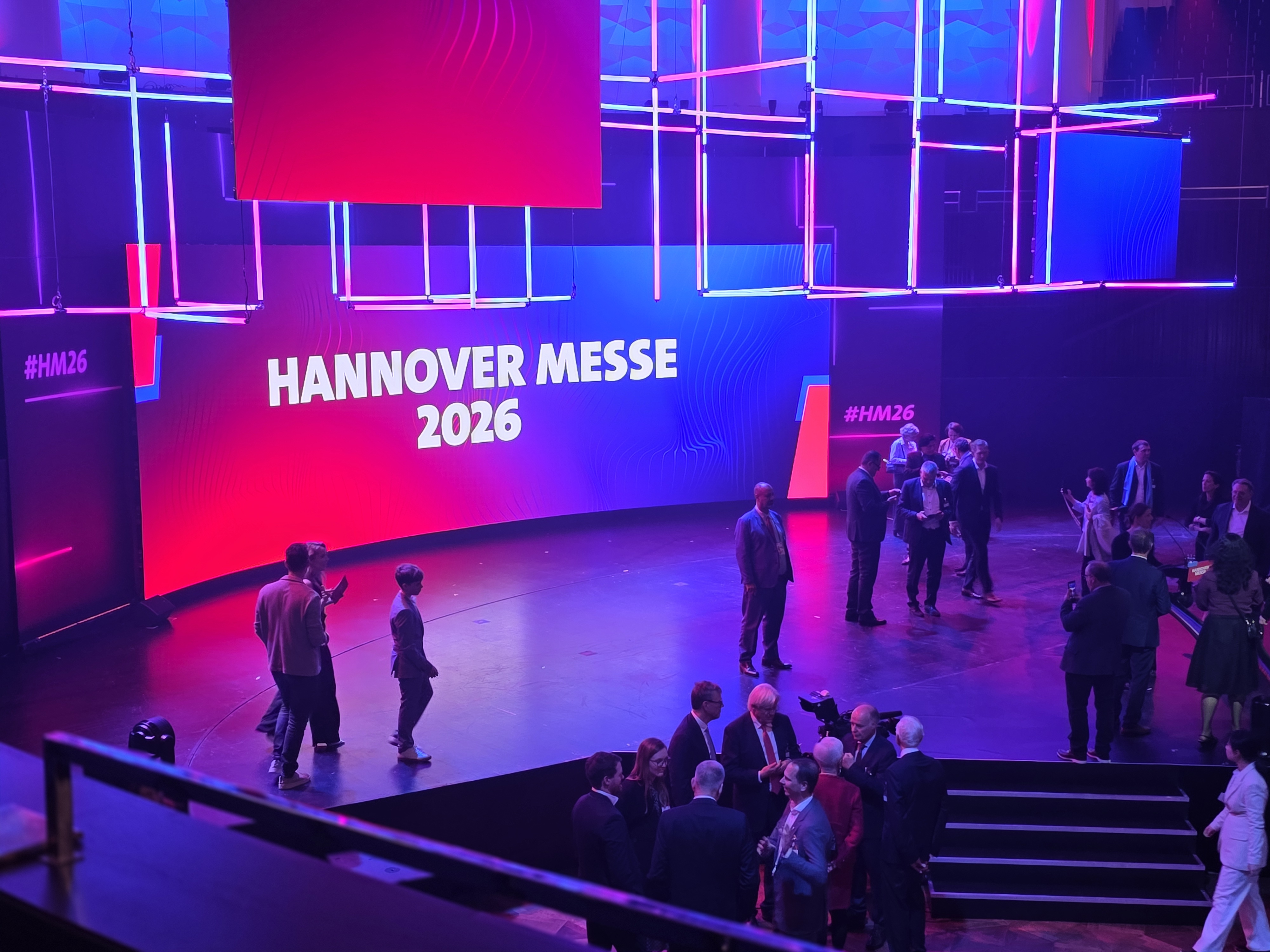
Review of AI-Based Application Systems at Hannover Messe 2026
AI-Based Application Systems at Hannover Messe 2026 – Research, Transfer, and Industrial Impact
Hannover Messe 2026 marked a significant milestone for the Junior Professorship of AI-Based Application Systems at the University of Potsdam. It provided a unique platform to present our research to a broad audience consisting of industry representatives, research partners, practitioners, political decision-makers, and international stakeholders.
We would like to thank all visitors, partners, colleagues, and supporters for inspiring discussions, new ideas, and promising follow-up activities. The strong interest at our booth demonstrated that AI-based application systems are not only a scientific topic, but a key enabler for the future of industry, sustainability, resilience, and digital sovereignty.
From AI Models to Self-Learning Value Creation Systems
Many current AI applications focus on individual models, isolated optimization tasks, or single use cases. Our research takes a broader perspective: we investigate how AI can become part of entire value creation systems. In this perspective, AI does not only support individual decisions, but represents essential behavioral structures of value creation systems, so that these systems can understand situations, make decisions, evaluate their effects, and continuously learn from them.
Conceptually, our work can be summarized as a transition from:
Data → Meaning → Decision → Impact → Learning
This means that AI does not merely calculate or predict. Instead, AI becomes an active decision-making component within production systems, enterprise software, heterogeneous computing infrastructures, and real-world applications. In this understanding, AI-based application systems generate and orchestrate relevant functions across technical, organizational, and human decision contexts.
At Hannover Messe 2026, this conceptual perspective was operationalized through several research-based artifacts and prototypes.
Scientific and Strategic Context
Scientifically, the presented work is positioned at the intersection of AI-based decision support systems, cyber-physical production systems, enterprise systems, Green AI, and sustainable computing. The central research question is how AI can be systematically embedded into socio-technical value creation systems that not only predict outcomes, but actively support, explain, and improve operational decisions across system boundaries.
This perspective is closely related to current developments in Industry 4.0 and Industry 5.0. While Industry 4.0 focuses strongly on digital connectivity, automation, and cyber-physical systems, Industry 5.0 emphasizes sustainable, resilient, and human-centered industrial development. The European Commission describes Industry 5.0 as a complementary perspective to Industry 4.0 that highlights sustainability, resilience, and human-centricity as key elements of future European industry.
Our contribution is to make this transition tangible: the presented demonstrators connect physical production, AI-based decision-making, ERP-based enterprise processes, heterogeneous computing infrastructures, and real-world artifacts such as drones and sensor-based systems.
For the public, this means that AI becomes easier to understand because it is shown in visible, concrete applications. For companies, it means that AI becomes actionable because it can be connected to production, ERP, data quality, and cost structures. For research and policy stakeholders, it means that AI-based application systems can serve as a platform for sustainable industrial transformation and digital sovereignty.
Neural Twins: A Behavioral Extension of Digital Twins
A key scientific concept behind our work is the Neural Twin. While a classical Digital Twin usually represents structures, states, or data of a real-world system, the Neural Twin extends this idea by digitally representing system behavior. It learns how a process behaves, how decisions influence outcomes, and how the system reacts under changing conditions.
This behavioral representation is essential for enabling adaptive, self-learning value creation systems. It enables AI to move beyond static process descriptions and toward dynamic decision models. In our research, the Neural Twin forms the basis for two novel methods introduced by Grum in 2022:
- Neural Process Simulations: a simulation technique that uses learned behavioral models and can be applied with arbitrarily refinable simulation accuracy, depending on the required level of detail.
- Neural Process Optimizations: a process improvement technique that uses neural behavioral representations to identify, evaluate, and improve process decisions. This approach has already received multiple awards.
In practice, this means that production processes, ERP processes, and application systems can be analyzed and improved not only by manually defined rules, but by learned behavioral models. The system can simulate possible futures, compare decision alternatives, and improve itself based on observed effects.
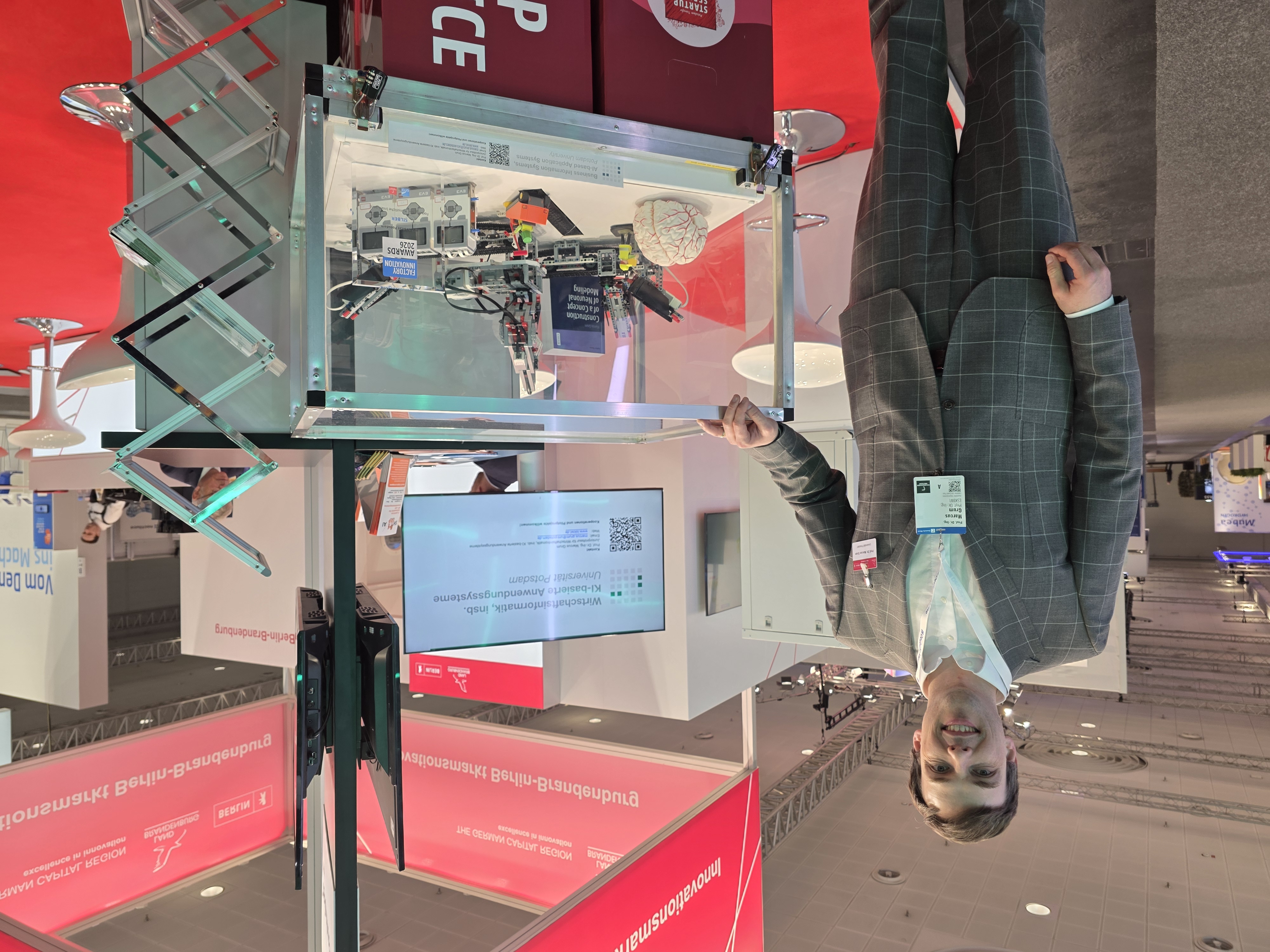
The Self-Learning Factory
The first central exhibit was the Self-Learning Factory. It shows how AI can support industrial production by detecting disruptions, adapting strategies, and improving throughput autonomously.
Rather than optimizing one isolated machine or process step, the Self-Learning Factory illustrates how AI can connect physical production, digital decision-making, and enterprise systems. This is highly relevant for manufacturing companies that aim to increase efficiency, resilience, and adaptability in complex production environments.
The demonstrator uses the idea of a Neural Twin to represent production behavior digitally. This enables Neural Process Simulations, in which different process strategies can be tested before they are applied to the real system. It also enables Neural Process Optimizations, where the system learns how to improve decisions based on observed performance, disruptions, and process outcomes.
For visitors, the Self-Learning Factory made a complex research idea directly observable: AI was not presented as an abstract algorithm, but as a decision layer that connects physical production with digital reasoning and continuous learning.
Green AI for Heterogeneous Computing Infrastructures
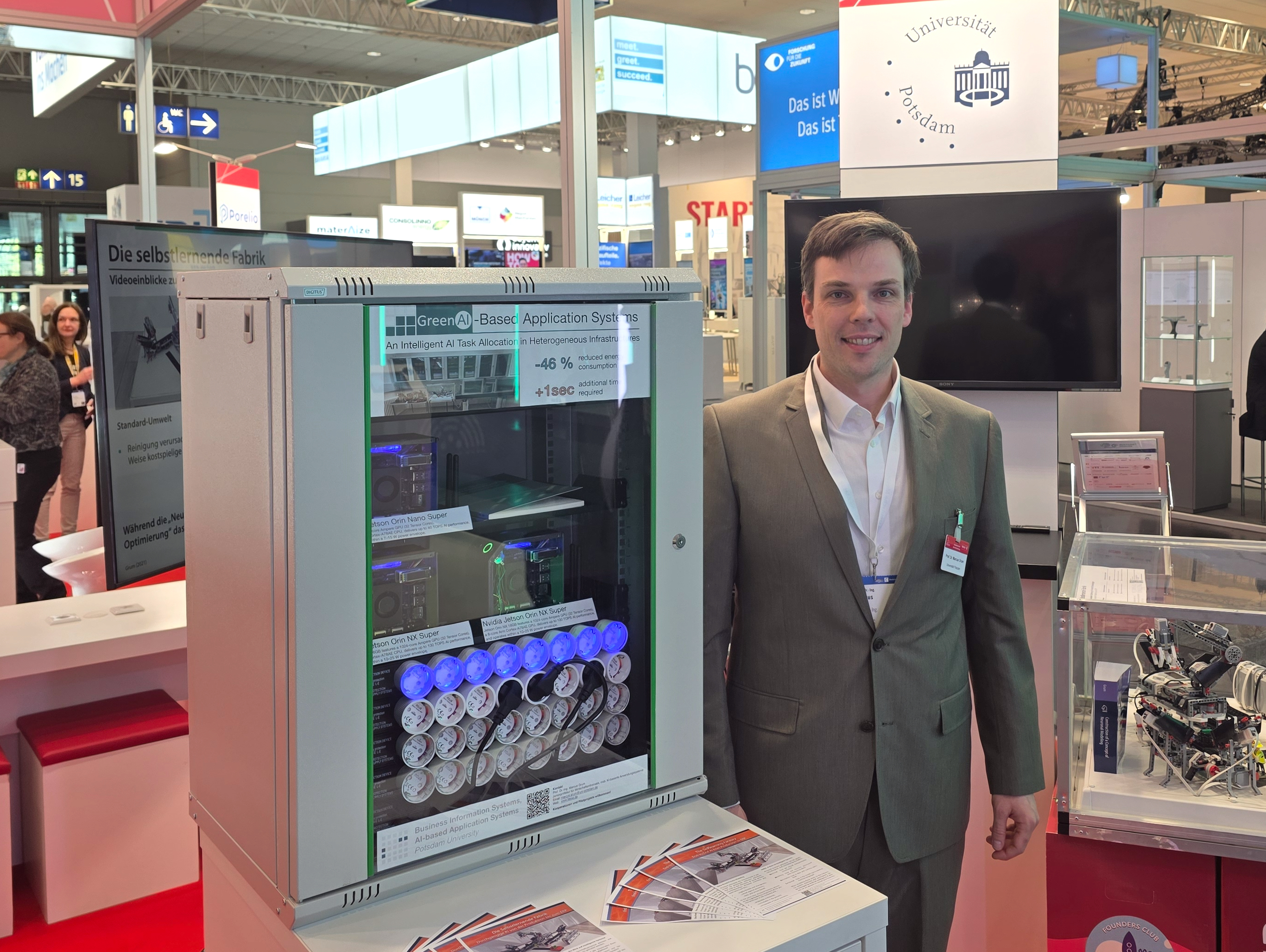
A second major focus was Green AI. We presented approaches for intelligent AI task allocation in heterogeneous computing infrastructures. The goal is to determine where and how AI tasks should be executed in order to minimize energy consumption while maintaining required performance levels.
This topic received significant attention because it connects three highly relevant questions:
- How can AI systems become more energy-efficient?
- How can companies reduce computing costs without losing performance?
- How can Europe build more sustainable and sovereign AI infrastructures?
Our demonstrator showed that AI-based application systems can contribute directly to resource efficiency, sustainable digitalization, and responsible industrial AI.
Evidence and Demonstrated Impact
The exhibition was not limited to conceptual explanations. The demonstrators also made initial performance, cost, and sustainability effects visible. In the demonstrated Green AI scenario, intelligent allocation of AI tasks across heterogeneous computing resources indicated substantial efficiency potential.
- up to 46% reduction in energy consumption in the demonstrated scenario,
- up to 22% reduction in total production costs,
- with only approximately one additional second of execution time.
These values are not presented as universal guarantees, but as evidence from our demonstrator settings. They show that AI-based application systems can make energy, cost, and performance trade-offs explicit and actionable. This is a key requirement for sustainable industrial AI, future data centers, and resource-aware enterprise systems.
The results also illustrate why Green AI is strategically relevant beyond a single use case: if AI systems are increasingly integrated into industrial processes, ERP systems, logistics, monitoring, and public-sector infrastructures, their energy and cost behavior must become part of the decision-making logic itself.
SherpAI – Research Transfer into AI-Based ERP Data Quality
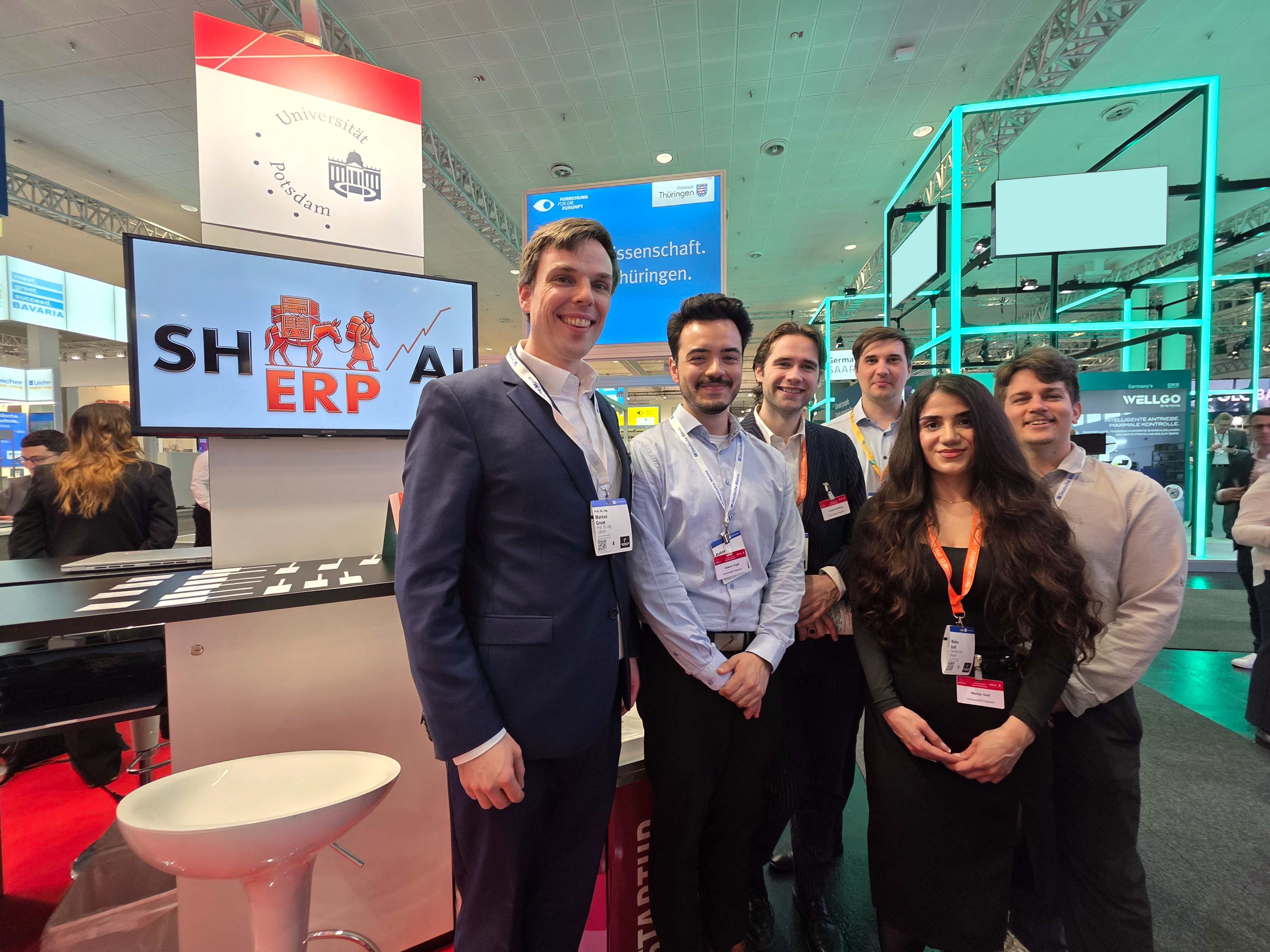
A third highlight was SherpAI, a research-based AI start-up initiative focused on data quality improvement in ERP systems. Poor data quality remains one of the most costly and underestimated problems in companies. Incorrect master data, inconsistent transactional data, or hidden data defects can lead to wrong planning, inefficient processes, and costly operational decisions.
In the context of the Self-Learning Factory, ERP data quality becomes directly relevant: a learning production system can only make reliable decisions if the underlying enterprise data is sufficiently correct, consistent, and meaningful. AI-based data quality improvement can therefore be understood as an additional optimization layer within the overall system architecture. At the same time, the required AI tasks can be allocated more efficiently across heterogeneous computing infrastructures through the Green AI approach presented above. This is why the integration of production intelligence, ERP intelligence, and resource-aware AI execution is a core element of our research.
SherpAI addresses this challenge by using AI to detect, explain, and correct data quality problems in enterprise systems. The approach shows how academic research can be translated into practical solutions for companies and ERP providers.
This exhibit attracted strong interest from companies that see a direct need for AI-based data quality solutions in their own products, production systems, ERP landscapes, and customer environments.
AI-Based Application Systems with Drones and Real-World Artifacts
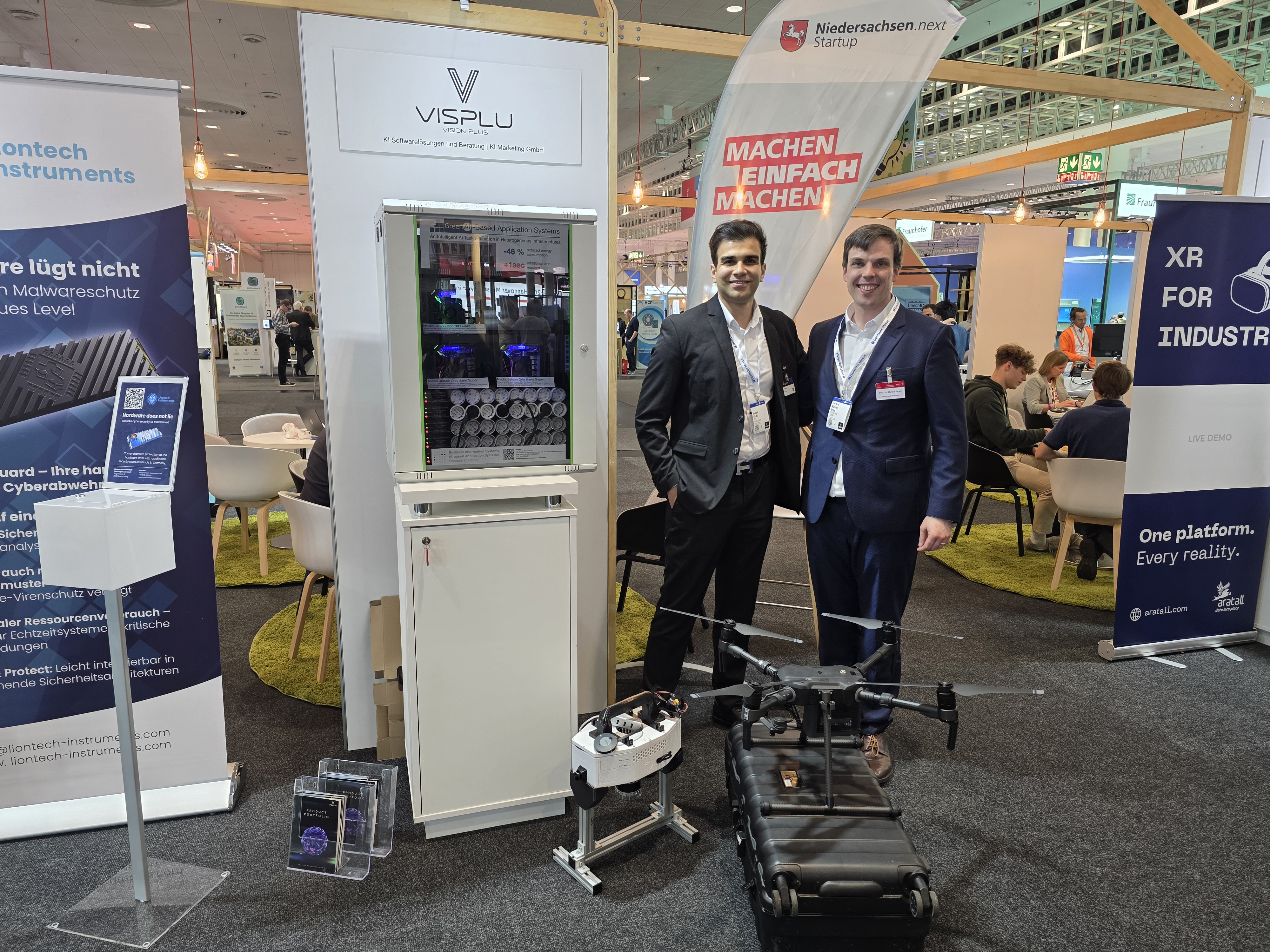
Together with the company Visplu, we also demonstrated how AI-based application systems can be connected to drone-based solutions and real-world industrial use cases. This exhibit highlighted the practical applicability of our research beyond the laboratory and showed how external devices can be integrated for intelligent Green AI task realization in heterogeneous computing infrastructures (see second artifact).
The combination of Green AI, sensor-based systems, drones, and application-oriented decision-making illustrates how AI-based application systems can support future industrial, logistical, and monitoring scenarios.
From a research perspective, such real-world artifacts are particularly important because they show how AI-based application systems can operate across multiple levels: sensing the physical world, allocating computational tasks efficiently, supporting decision-making, and connecting results back to business and operational processes.
Factory Innovation Award 2026
A special highlight of Hannover Messe 2026 was receiving the Factory Innovation Award 2026 in the category “Research: Artificial Intelligence in the Factory” on April 22, 2026.
The award recognized our work on:
- the Self-Learning Factory,
- Green AI distribution approaches in heterogeneous infrastructures,
- Neural Twins as behavioral extensions of Digital Twins,
- Neural Process Simulations and Neural Process Optimizations, and
- AI-Based Application Systems as the integrating concept.
This recognition provides strong validation that our research addresses highly relevant challenges in industrial AI. It also underlines the potential of AI-based application systems as a bridge between scientific excellence, industrial transformation, sustainable digitalization, and practical technology transfer.
The following pitch video (in German, with available English subtitles) provides additional insights into how the presented concepts were communicated in the context of the Factory Innovation Award 2026:
High Visibility Among Industry, Research, and Political Stakeholders
The exhibition attracted a large and diverse audience. Visitors ranged from interested practitioners to leading representatives from industry, research institutions, public administration, and politics.
Many companies expressed strong interest in transferring our research approaches into their production environments, data centers, digital products, or customer solutions. Several discussions have already continued after the fair and are currently developing toward joint research projects, pilot implementations, and third-party funding proposals.
These interactions also included exchanges with high-level political stakeholders, including discussions at ministerial level, highlighting the strategic relevance of AI-based application systems for industrial policy, sustainability, and digital sovereignty.
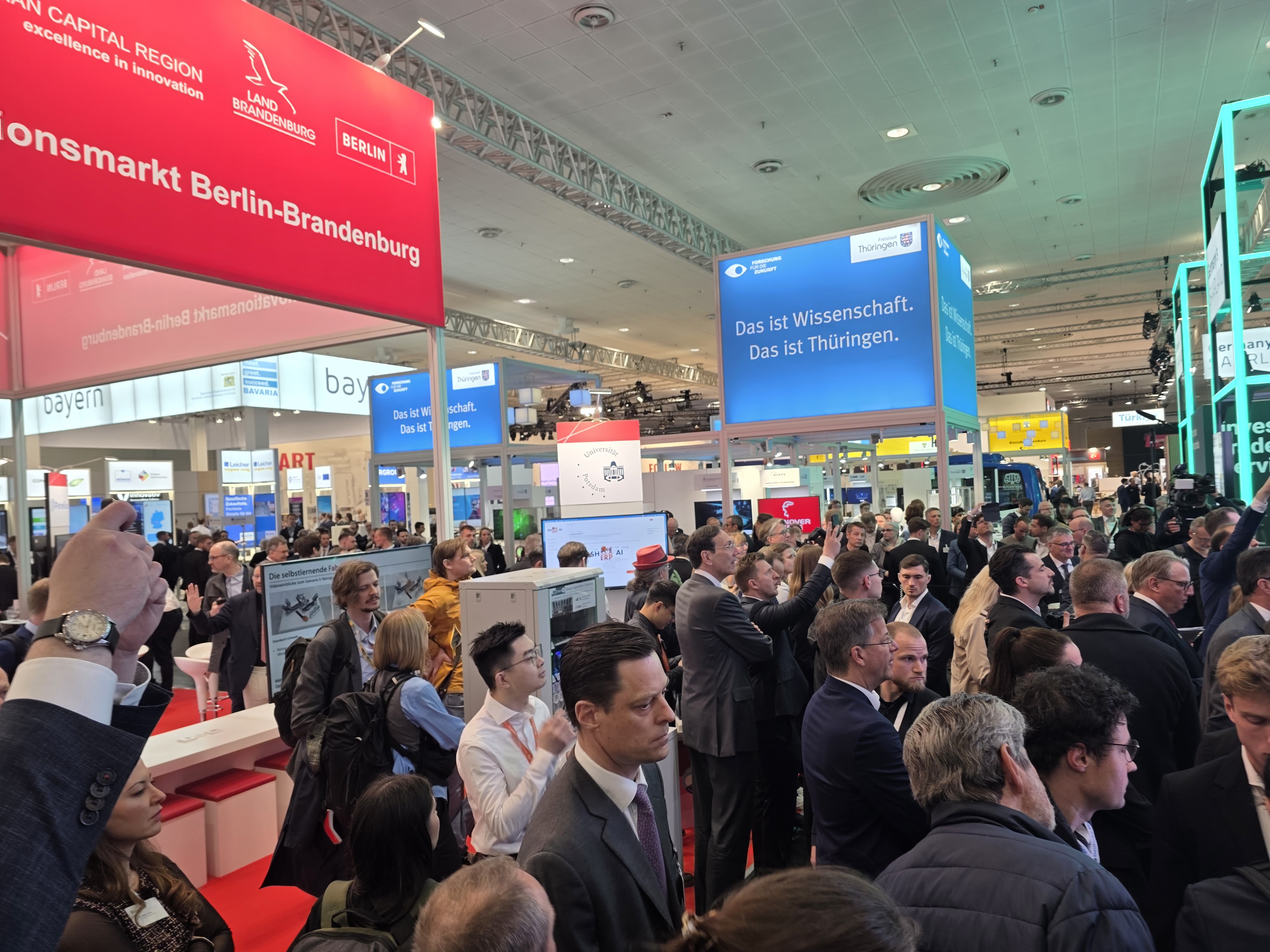
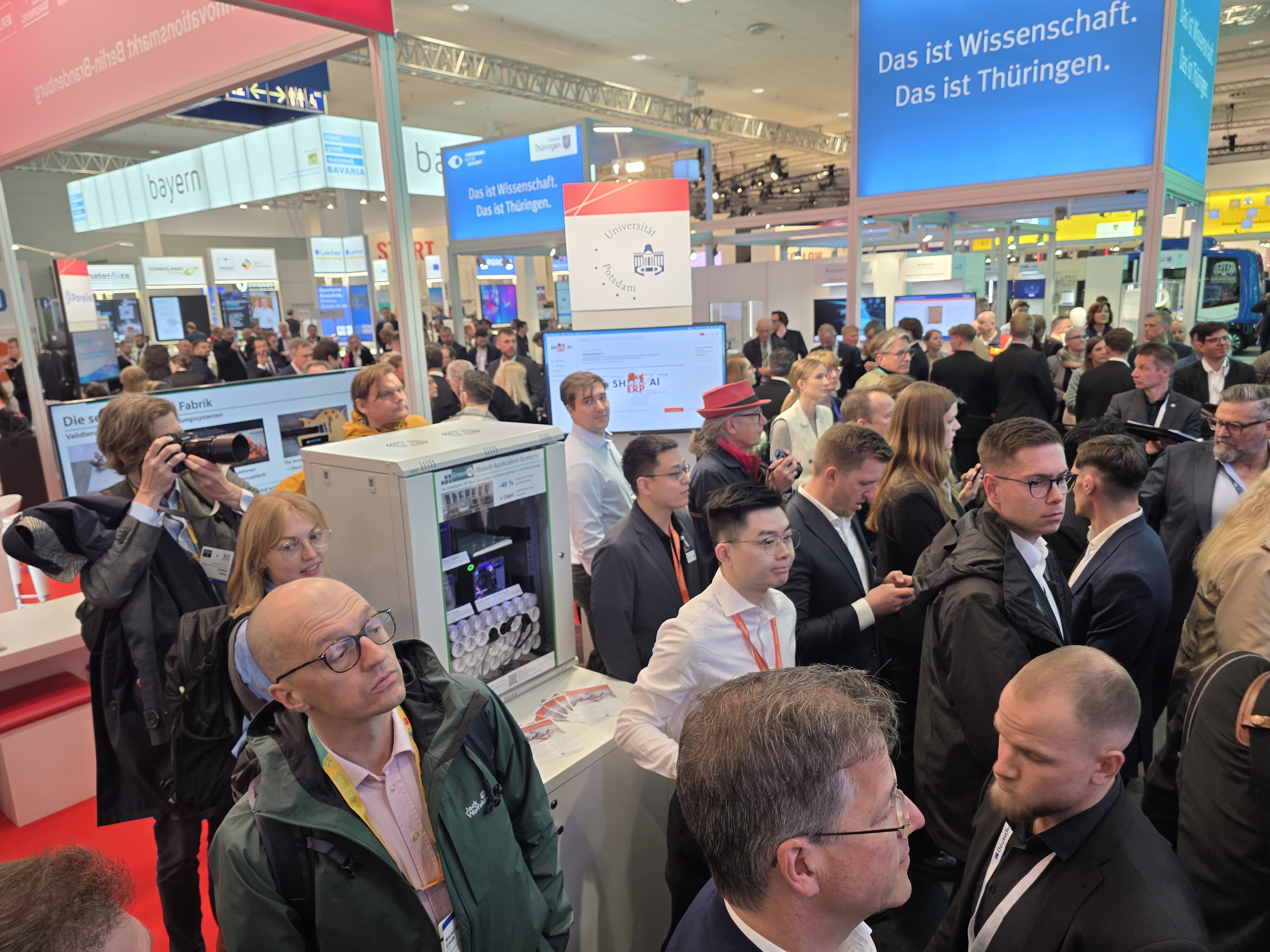
Exchange with Political Decision-Makers
A particularly important part of the exhibition was the exchange with several political representatives. Among them were Martina Klement, Brandenburg Minister for Economic Affairs, Energy, Climate Protection and Europe, and Severin Fischer, State Secretary at the Berlin Senate Department for Economic Affairs, Energy and Public Enterprises.
We discussed the potential of AI-based application systems for industrial innovation, sustainable computing, and the competitiveness of the Berlin-Brandenburg innovation region.
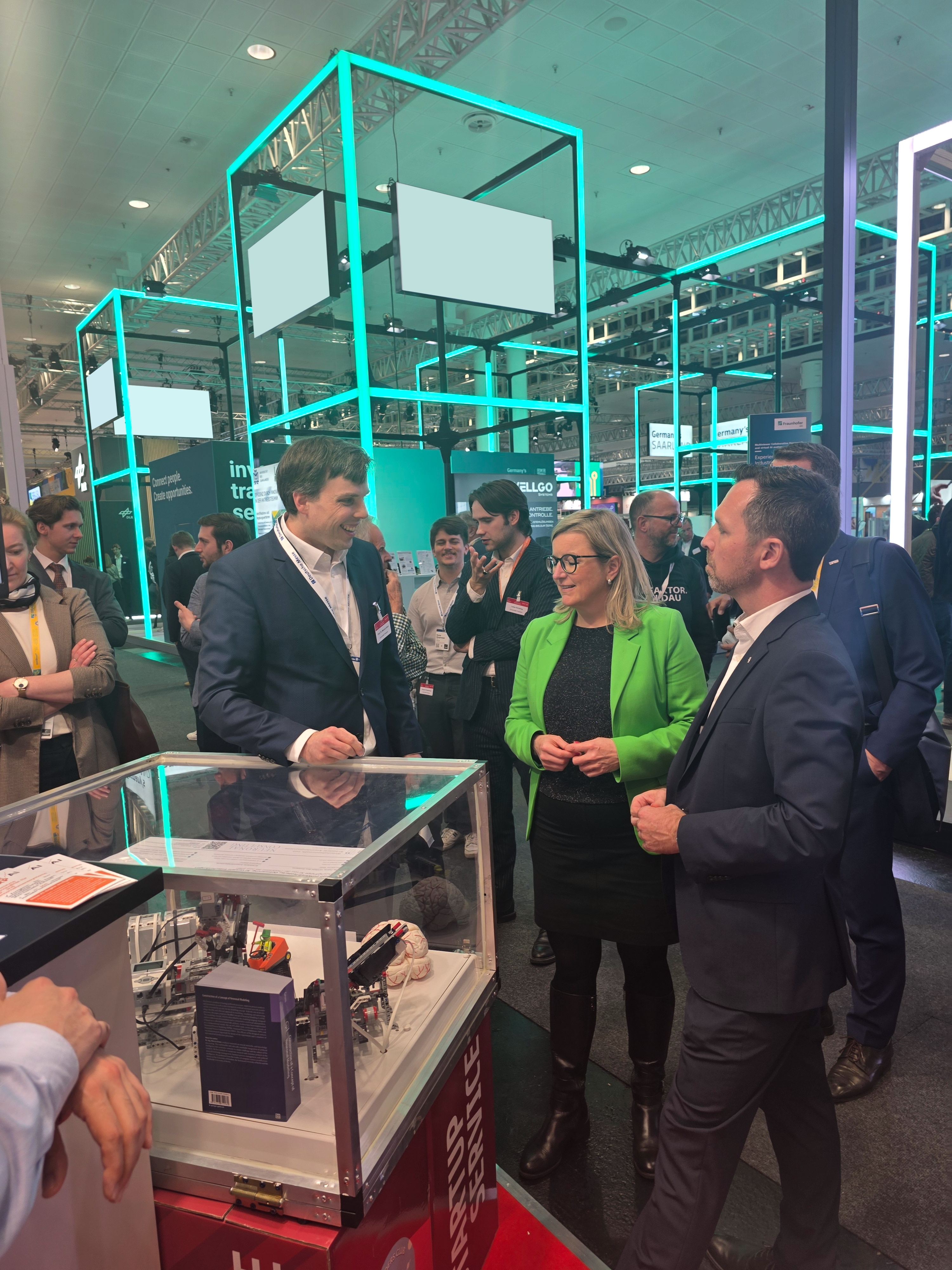
Another major highlight was the visit of Katharina Reiche, German Federal Minister for Economic Affairs. The exchange focused on how AI-based application systems can help strengthen Germany’s industrial and ERP base, improve energy efficiency, and develop sovereign Green AI capabilities at the system level.
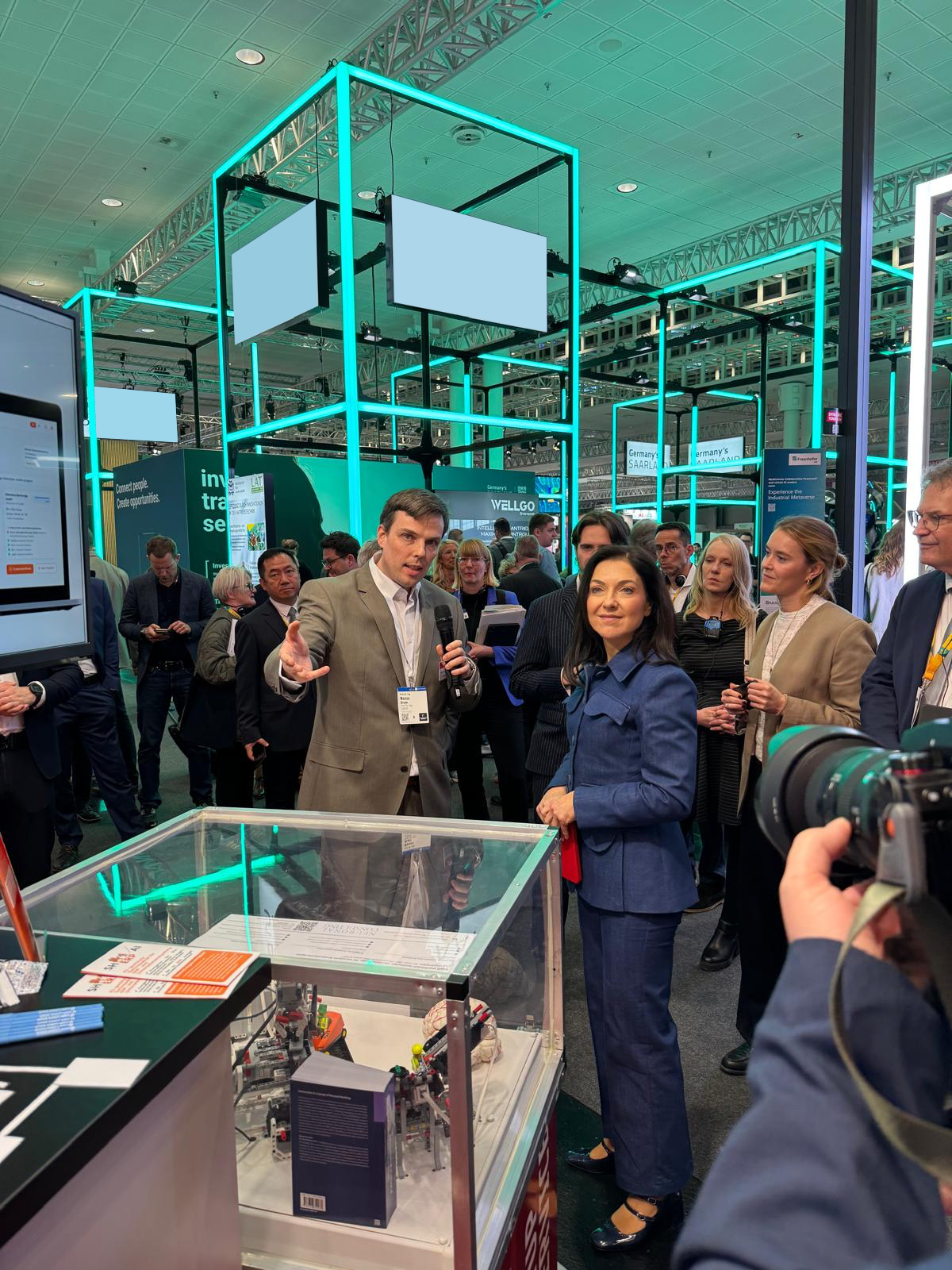
These conversations showed that our research is directly connected to key national and European challenges: industrial competitiveness, energy efficiency, resilience, sustainable AI infrastructures, and technological sovereignty.
International Interest in Green AI
In addition to strong interest from German and European stakeholders, our work also attracted international attention from Japan, India, Hungary, the United States, South America and Norway. In particular, representatives connected to the government of Bangladesh expressed interest in our Green AI research. This reflects the global relevance of energy-efficient AI infrastructures, especially in regions where sustainable digital transformation is of strategic importance.
This international attention is an encouraging sign that AI-based application systems can contribute not only to regional and national innovation, but also to global sustainability and development goals.
Toward Trustworthy and Scalable AI-Based Application Systems
For industrial and public-sector adoption, AI-based application systems must be more than technically powerful. They must also be explainable, governable, secure, scalable, and integrable into existing organizations.
Therefore, our research explicitly addresses how AI decisions can be made transparent, how humans remain involved in critical decision processes, and how AI systems can be embedded into existing technical and organizational infrastructures. This is especially important for production environments, ERP systems, public-sector applications, and critical infrastructures.
This perspective is also aligned with national standardization initiatives and international discussions on trustworthy and responsible AI. The NIST AI Risk Management Framework supports organizations in managing risks related to AI systems. The ISO/IEC 42001:2023 standard provides guidance for AI management systems and addresses challenges such as governance, transparency, risk management, and continuous improvement.
In future collaborations, pilot projects should therefore not only evaluate technical performance, but also consider energy consumption, cost effects, data quality, human oversight, organizational integration, and responsible AI governance.
Research with Strong Transfer and Funding Potential
The discussions at Hannover Messe 2026 confirmed the strong transfer potential of our research. The presented artifacts are not abstract concepts, but tangible demonstrators that make complex AI research understandable, discussable, and applicable.
They provide excellent starting points for:
- joint research projects with industry partners,
- pilot implementations in production and enterprise systems,
- third-party funded research proposals,
- technology transfer and start-up activities,
- regional, national, and international innovation initiatives,
- doctoral initiatives in my team, and
- interested students, especially those considering studying at the University of Potsdam.
For the Junior Professorship, this represents an important step in building a research profile that combines scientific depth, practical relevance, transfer orientation, and societal impact.
Video Insight: AI and ERP Decision-Making
Together with Gebauer GmbH, we also presented how AI-based application systems can be integrated into timelineERP systems to support decision-making and customer-value-oriented process improvement.
The video was created by Samuel Kumanan and Gebauer GmbH.
Further Scientific and Strategic Context
The presented work connects to ongoing scientific and policy discussions on AI-based decision support systems, cyber-physical production systems, Industry 5.0, Green AI, and trustworthy AI governance.
- European Commission: Industry 5.0 – towards a sustainable, human-centric and resilient European industry
- NIST: Artificial Intelligence Risk Management Framework
- ISO/IEC 42001:2023: Artificial Intelligence Management System
- Grum, M. (2022): Construction of a concept of neuronal modeling. Springer Nature. https://doi.org/10.1007/978-3-658-35999-7
Thank You
We would like to thank everyone who made this successful exhibition possible: my team, our partners, the University of Potsdam, Potsdam Transfer, TUB/CO, all visitors, and everyone who contributed to the many valuable discussions during Hannover Messe 2026.
Hannover Messe 2026 demonstrated that AI-based application systems can serve as a foundational layer for the next generation of intelligent, sustainable, trustworthy, and resilient value creation systems.
We look forward to continuing the many promising conversations, developing new collaborations, and further strengthening the role of the University of Potsdam in this important field of research and transfer.
Getting-in-Contact
Services
Address
- + 49 (331) 977 3232
- hello@paibis.de
- Karl-Marx-Straße 67, 14482 Potsdam, Germany.